History of DNA Synthesis and the Organism
Media
Image
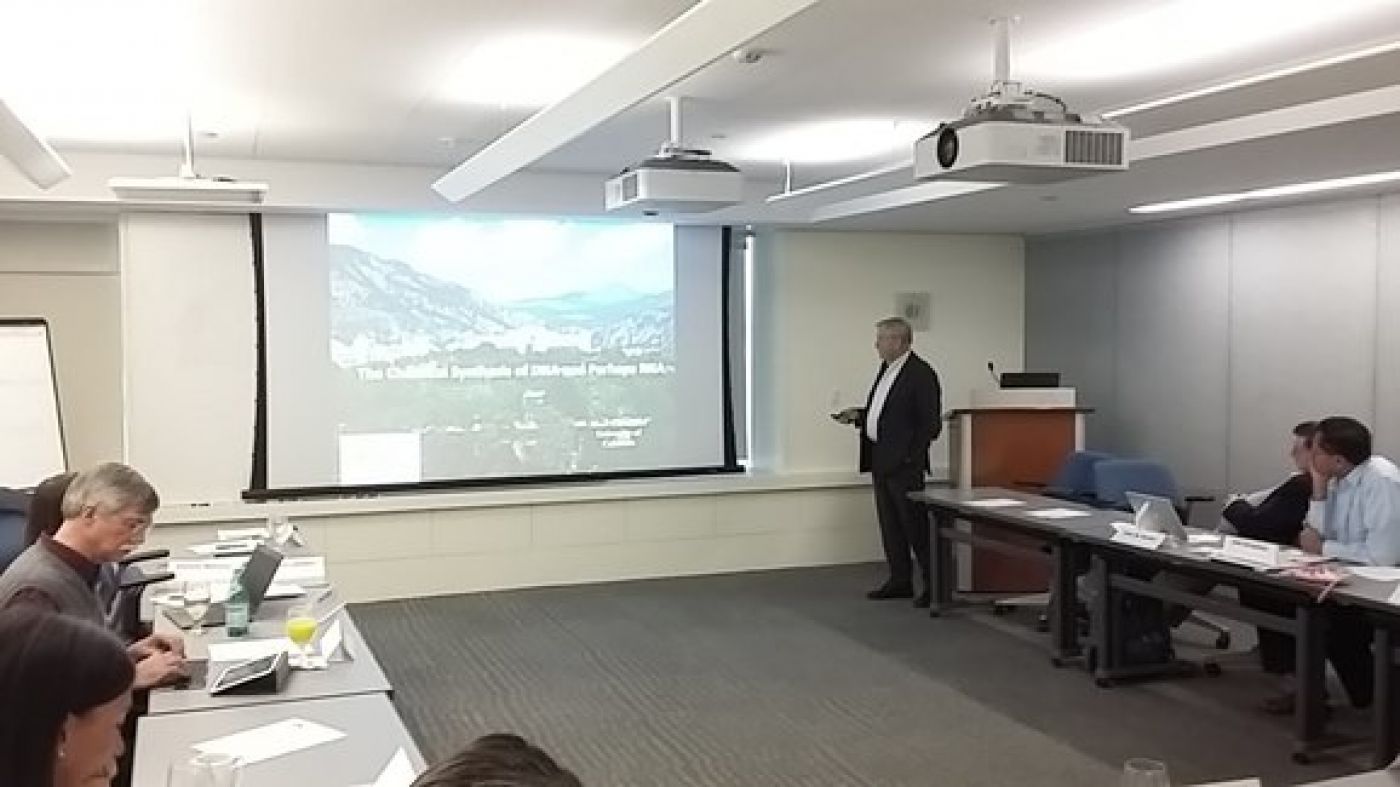
Description
Workshop Report DOI: 10.13140/RG.2.2.17137.74088
We would also like to record our thanks to Dr. Dmitriy Myelnikov who designed the report and put it through production.
The fourth in our series of experimental workshops was organised around a historical interest in the relations between biology and engineering. To make this theme manageable we focused attention on one set of technologies, ideas, and developments in particular: the efforts of a small international community of scientists and engineers who, from around the 1960s, picked up the challenge of synthesizing nucleotide sequences without having to rely on finding desired sequences in existing organisms. This was the making of sequences through chemistry, technology and engineering, sequences which could go on to function identically to those nucleotides inherited by organisms or transplanted from one to the other. While the historiography of biotechnology is vast, the capacity for DNA synthesis itself has largely gone unnoticed, the vast majority of work focusing on techniques for recombination, its meanings, broader social significance, and reception among diverse publics. By staying focused on the particularities of biological molecules as synthesised we can break new ground, drawing in material culture, engineering studies, and their historical, philosophical and sociological intersections.
We were very pleased to be able to organise this meeting in collaboration with the Chemical Heritage Foundation in Philadelphia, who also hosted the event. We invited a wide range of speakers, including key figures from the origins of DNA synthesis, such as Marvin H. Caruthers, and leaders of the contemporary DNA synthesis business, such as Emily Leproust. A full list of speakers and their short biographies can be found in the workshop report document. Following this workshop it is hoped that further historians will contribute to the history of DNA synthesis, and that museums will be able to acquire objects that record its material history. If you would like to know more please email Dr Dominic Berry on dominicberry88@gmail.com